Frederick Buskey
  • Resources
    • The Assistant Principal Podcast >
      • Frederick's Featured Podcasts
    • Daily Emails
    • Free Resources
  • reclaiming purpose
  • Support and Services
    • Testimonials
    • Strategic Leader Academy >
      • Building Classroom Culture
    • Coaching
    • Speaking
Picture
Subscribe here!

May 22nd, 2020

5/22/2020

0 Comments

 
​Colleagues,
 
We’ve looked at the first two steps of problem identification this week.
 
Consulting stakeholders, obvious and less obvious, is critical in the sunburst process as it helps generate diverse perspectives. 
 
Some of these perspectives may be far-fetched while others may be spot on. Some may even seem silly, but the value in the sunburst doesn’t lie with any single option (or sunray). The value lies in the collection or totality of the options.
 
We’ll start processing all these options next week, but we will wrap this week up with a small offering.
 
Close your eyes for five seconds and think of three changes you are trying to make (or things you are trying to fix) in your organization. 
 
Got it?
 
Now answer this question: what problem are you trying to solve?
 
Too many times we fix things that aren’t really broken. Or we make them better when they were already good enough. Be ruthless in asking this question any time you are contemplating a change. What problem are you trying to solve?
 
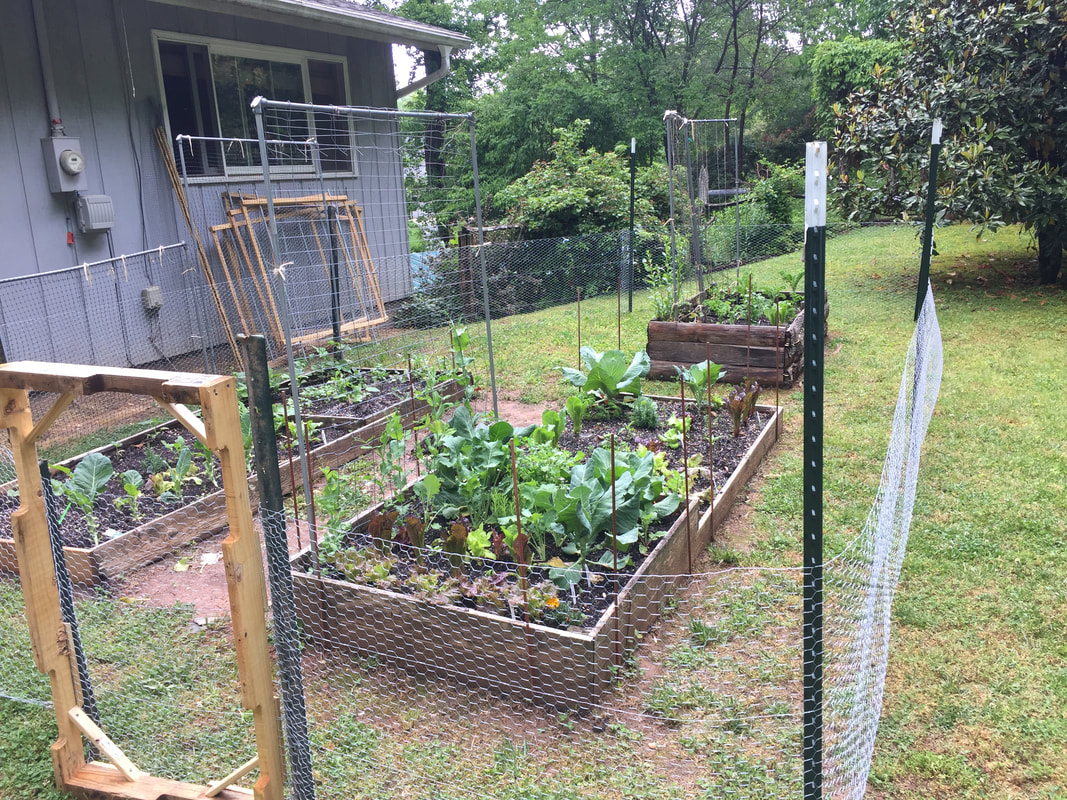
You will recall that I was having critter issues in my garden a few weeks ago. I developed all kinds of plans for fences, barriers, and walls. Some of them were going to be beautiful. I even thought about expanding the garden so it would be more symmetrical. But why? What problem was I trying to solve?
​I just needed a simple wire fence to keep out critters. I kept imagining solutions that were about other things – creating a more aesthetic garden, practicing making fancy gates, using my wood working skills. These were all distractions!
Picture
​What problem are you trying to solve? If you can’t answer that question, your actions are meaningless.
 
Do good and be well,
 
Frederick
0 Comments

Sunburst II

5/21/2020

0 Comments

 
​ Colleagues,
 
The beauty of going from point A to point B is that you don’t have to go far to realize you are off track!
 
In Monday’s email, which came out Tuesday, I mentioned that this topic is a 1 ½ day workshop. Fitting it into five 300-word messages isn’t working, so we are adjusting course.
 
The first step to identifying the root problem of an issue is to identify all of the stakeholders. The second step is to engage in the sunburst activity.
 
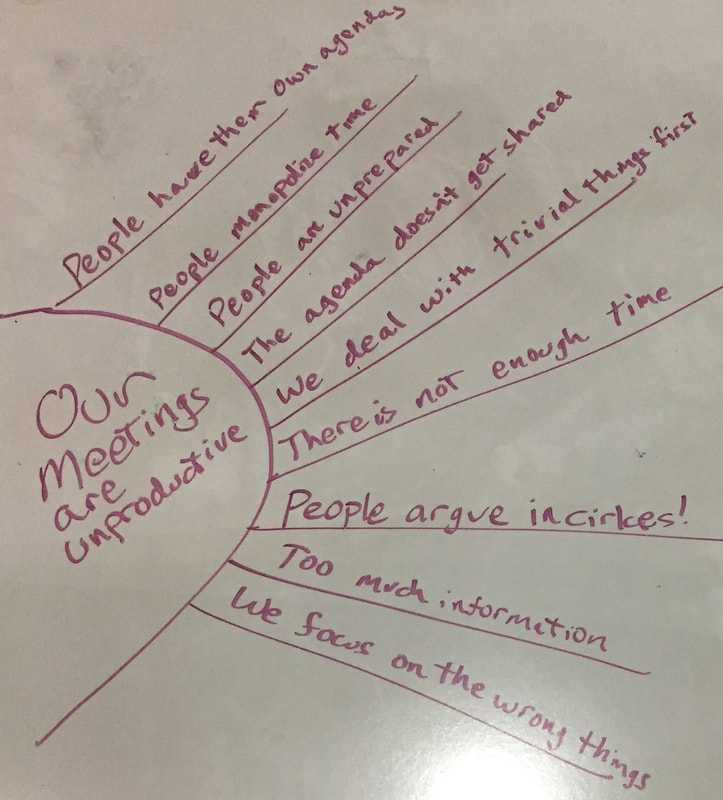
Example: our meetings are unproductive. Why?
Picture
  • People have their own agenda
  • People monopolize time
  • People are unprepared
  • The agenda doesn’t get shared
  • We deal with trivial things first
  • There is not enough time
  • People argue in circles (not “people are jerks”)
  • Too much information
  • We focus on the wrong things
Notice:
  • This Is not a thorough list. 
  • I did this on my own so there are missing perspectives.
  • The first three points are about people, or possibly one person! It is easy to latch onto something and throw down a bunch of stuff, but in this phase that’s okay!
  • You may already see some patterns, but this is not the time to censor your thoughts or start reducing the variety.
  • These responses were shaped by my perspectives and experiences. Without others’ perspectives and experiences, the list will be incomplete.
  • All of these can be true.
 
Please do one of two things:
  1. Think about some additional “whys” that should be on the sunburst and email them to me by clicking here.
  2. Think about one of your own issues and create a quick sunburst on you own (or get brownie points for involving others).
 
If I don’t receive a bunch of emails I’ll know you have been busy reflecting =;^}
 
Do good and be well,
 
Frederick
0 Comments

Using the Sun to Focus on the Problem

5/20/2020

0 Comments

 
​Colleagues,
 
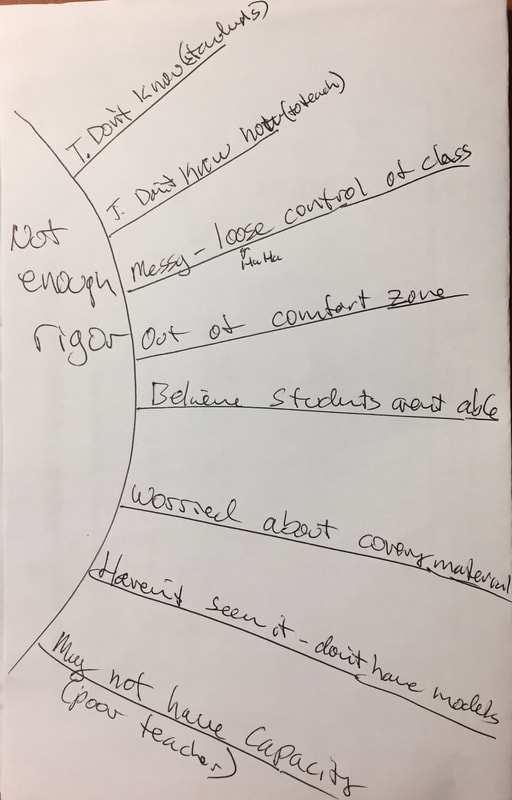
Once we identify stakeholders, it’s time to expand the possible reasons causing our issue by using a sunburst.
 
Our goal is to generate as many ideas as possible. Begin by creating a sunburst diagram with you issue in the center phrased as “Why is x issue happening?”
 
With stakeholders, develop a list of all the possible reasons. 
 
There are three challenges in this part of the process:
  1. We rush to judgement (“that’s it!”) and cut the process short.
  2. We don’t hear form everyone. Some people naturally sit back and assimilate what others are saying. They often produce critical insights, but only towards the end of the process. 
  3. We censor our ideas by analyzing them.
 
Here are some best practices to help:
  1. Make your goal to get as many ideas as possible.
  2. Stay focused on generation and avoid analysis
  3. Monitor who participates and who doesn’t. Invite silent voices into the process. Create space by using silence (11 seconds) to provide people to think.
 
If you can’t do this with stake holders present, here are some options:
  • Frame the issue and ask for ideas by email. Compile all the ideas and reshare for a second round.
  • Put up a poster in a space that people will have access to. Leave it up for a period of time that allows people to contribute asynchronously.
  • Seek out a missing member individually, record their ideas and add to the diagram.
 
How to take shortcuts for a minor issue:
  • Decrease the number of stakeholders.
  • Shorten the process to a few minutes.
  • If nor urgent, do it asynchronously (email, etc…).
 
Your turn! Assemble your stakeholders and develop a sunburst. I’ve included an example here. 
 
I would love to see what you came up with so please consider using the links below to share. 
 
If you have questions, let me know and I can address them.
 
Do good and be well,
 
Frederick
Picture
0 Comments

Who Are Your Stakeholders?

5/19/2020

0 Comments

 
Colleagues,
 
Pause and think about two issues you are facing, one minor and one major.
 
The urgent algorithm often causes us to skip the most critical piece of the entire problem-solving process: consulting with all the stakeholders. Why?
 
We may believe:
  1. As leaders we should have the answers.
  2. We don’t have time.
  3. We don’t want to bother them.
  4. We don’t think they will help.
 
These beliefs and behaviors undermine our leadership. A great example of the importance of stakeholders is in this hilarious 46 second video. 
 
The first group of stakeholders are the obvious ones:
  1. Their work is impacted by the issue.
  2. They are part of the issue.
  3. They will likely play a role in implementing a solution.
 
Make a list of the stakeholders for each of your issues, minor and major.
 
The second group of stakeholders are less obvious:
  1. They have specialized knowledge related to the issue.
  2. They are impacted in a less obvious way.
  3. They aren’t in our immediate circle
 
Make a list of the stakeholders for each of your issues, minor and major.
 
In taking the next steps, these people should be included. If it seems too cumbersome to include all of them, here are some strategies:
  • Instead of a big meeting, have them participate asynchronously.
  • Use them to vet ideas and possible actions.
  • Meet individually with people who should not be part of a larger group.
 
Reflect on this: 
  • In your last failed initiative, who was at the table during the development of the “solution”? 
  • Who was missing? 
  • What difference could it have made? 
 
Do good and be well,
 
Frederick
0 Comments

What's the Problem?

5/18/2020

0 Comments

 
Colleagues,
 
This week we dive into the second key of leading strategically, focusing on problems instead of symptoms.
 
Problem identification is part of a larger model called the Strategic Action Cycle (SAC). A full SAC training spend 1 ½ days on problem identification, so this week’s emails will just scratch the surface. 
Our problem-solving process will:
  • Focus on what’s meaningful
  • Use a simple(ish) process
  • Make better decisions

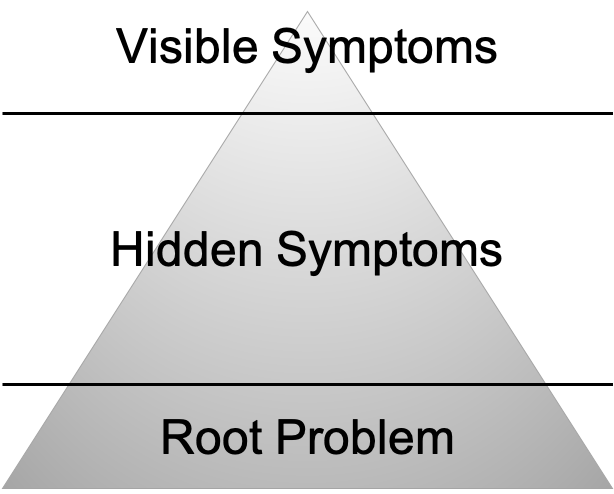
In essence, examining a problem is like exploring an iceberg. We encounter a visible issue, most often a symptom of something that is hidden or invisible. 

Picture
In our simplified process we may still get to the root problem, but sometimes we’ll only find hidden symptoms and that’s okay. Any incremental improvement is a win.
 
We will dig into the four parts of the process beginning tomorrow, but here is an overview:
  • Gather all stakeholders
  • Generate possibilities by asking why
  • Explore possibilities by asking why and wondering
  • Find connections
Keep in mind that we can adapt the process to fit the importance or complexity of the problem. We can simplify and take short cuts for small issues or be more thorough and intensive for big issues.
 
If you only take away two things from the week, they are:
  1. Consult stakeholders before acting.
  2. Stop and look at what might be causing the issue under the symptom.
Do good and be well,

Frederick
0 Comments
<<Previous
Forward>>
    Want my blog delivered to your in box? Sign up here!

    Categories

    All
    5 Minute Coaching
    Acting With Intention
    Leading From Home
    Leverage
    Problems And Symptoms
    Problem Solving
    Serving Others
    Strategic Leader
    The Three Epiphanies

    Archives

    January 2026
    December 2025
    November 2025
    October 2025
    September 2025
    August 2025
    July 2025
    June 2025
    May 2025
    April 2025
    March 2025
    February 2025
    January 2025
    December 2024
    November 2024
    October 2024
    September 2024
    August 2024
    July 2024
    June 2024
    May 2024
    April 2024
    March 2024
    February 2024
    January 2024
    December 2023
    November 2023
    October 2023
    September 2023
    August 2023
    July 2023
    June 2023
    May 2023
    April 2023
    March 2023
    February 2023
    January 2023
    December 2022
    November 2022
    October 2022
    September 2022
    August 2022
    July 2022
    June 2022
    May 2022
    April 2022
    March 2022
    February 2022
    January 2022
    December 2021
    November 2021
    October 2021
    September 2021
    August 2021
    July 2021
    June 2021
    May 2021
    April 2021
    March 2021
    February 2021
    January 2021
    December 2020
    November 2020
    October 2020
    September 2020
    August 2020
    July 2020
    June 2020
    May 2020
    April 2020
    March 2020

    RSS Feed

Proudly powered by Weebly
  • Resources
    • The Assistant Principal Podcast >
      • Frederick's Featured Podcasts
    • Daily Emails
    • Free Resources
  • reclaiming purpose
  • Support and Services
    • Testimonials
    • Strategic Leader Academy >
      • Building Classroom Culture
    • Coaching
    • Speaking